
Marc Leman has led for several decades the Institute for Psychoacoustics and Electronic Music (IPEM) at Ghent University, where he served as Professor of Systematic Musicology. His work has been widely recognized for pioneering interdisciplinary research in musicology, successfully bridging fields such as computer science, music information retrieval, neuroscience, behavioral science, movement science, music analysis, and acoustics. Over the course of his career, he has authored more than 350 scientific publications, including several influential books published by MIT Press, Routledge, and Springer. Prof. Leman is widely regarded as one of the founding figures of the Embodied Music Cognition framework, following his seminal 2007 book Embodied Music Cognition and Mediation Technology (MIT Press). He has secured numerous national and international research grants, including prestigious Methusalem funding and several Horizon 2020 projects. Throughout his career, he has mentored and launched the careers of many researchers who now hold positions across Europe and internationally, contributing to the continued development of interdisciplinary music research.
 Peter E. Keller is Professor of Neuroscience in the Center for Music in the Brain and the Department of Clinical Medicine at Aarhus University, with a joint appointment in the MARCS Institute for Brain, Behaviour and Development at Western Sydney University.
Combining approaches from psychology, neuroscience, and musicology, Prof. Keller has made influential contributions to understanding how individuals synchronize their actions with others in complex musical contexts.
His work integrates behavioural experiments, motion capture, and neurophysiological methods to investigate ensemble performance, sensorimotor synchronization, and the role of predictive processing in music and social interaction.
Throughout his career, he has worked in several countries and established extensive international collaborations, reflecting the strongly international scope of his research.
Keller has published extensively in leading journals across cognitive science, psychology, and neuroscience, and has led numerous international research collaborations and funded projects.
Through his scholarship and mentorship, he has played a key role in advancing the interdisciplinary field of music cognition and the scientific study of musical interaction.
 Fiorenza Toccafondi is Professor of History of Philosophy at the University of Florence; she previously taught History of Contemporary Philosophy at the University of Parma. Her research focuses on phenomenology, ontology, and early twentieth-century European philosophy, with particular attention to the relations between philosophy and science, the Gestalt tradition, and the thought of authors such as Karl Bühler, Ludwig Klages, and Max Scheler. Since 2002 she has been a member of the Gesellschaft für Gestalttheorie und ihre Anwendungen (GTA). From 2005 to 2016 she served on the Wissenschaftlicher Beirat of the Jahrbuch für Europäische Wissenschaftskultur. She was Editor-in-Chief of Gestalt Theory. An International Multidisciplinary Journal and is currently Co-Editor-in-Chief of Intersezioni. Rivista di Storia delle idee. Among her books are I linguaggi della psiche (1995), L’essere e i suoi significati (2000), Il tutto e le parti (2000), Mente, mondo e affetti (2019), and Max Scheler. L’ambiente, gli altri, i valori (2023).
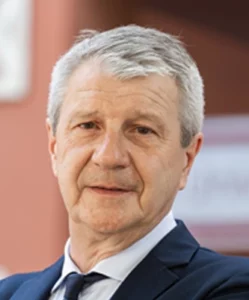 Mauro Antonelli is Full Professor of the History of Science at the University of Milano-Bicocca and Privatdozent in Philosophy at the University of Graz. His research focuses on the history and philosophy of psychology, phenomenology, and phenomenological psychology, with particular attention to the development of the phenomenological tradition in nineteenth- and twentieth-century Austria and Germany. He is Editor-in-Chief of the European Yearbook of the History of Psychology (Brepols) and of the book series Studien zur österreichischen Philosophie (Brill/De Gruyter), and Co-Editor of the series Meinong Studien / Meinong Studies (De Gruyter). He has authored numerous books, articles, and essays published nationally and internationally. His recent publications include Vittorio Benussi in the History of Psychology: New Ideas of a Century Ago (2018); Franz Brentano: Critical Assessment (2018, 4 vols., with F. Boccaccini); and Franz Brentano, Gustav Theodor Fechner: Briefwechsel über Psychophysik, 1874–1878 (2015).
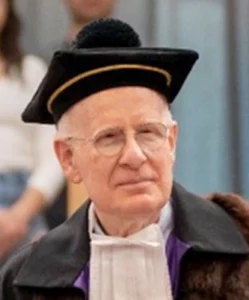 Vincenzo Fano is Full Professor of Logic and Philosophy of Science at the University of Urbino “Carlo Bo”. His research spans philosophy of physics, epistemology, historyof philosophy, and metaphysics, with a special focus on the interplay between science and philosophy. He currently serves as President of the Italian Society for Logic and Philosophy of Science (SILFS), Director of the Urbino Summer School in Epistemology, and Director of the Urbino International School in Philosophy and Foundations of Physics. He is also a member of the Académie Internationale de Philosophie des Sciences. Author of numerous books and articles in leading journals, he has held visiting positions at institutions such as the University of Western Ontario, the University of Pittsburgh, and Helsinki University.
 Liila Taruffi is Assistant Professor at the Academy of Music, Hong Kong Baptist University, with an interdisciplinary background spanning the sciences and humanities. She holds a BA and MA in Philosophy of Music and an MSc and PhD in Music Psychology, and has held research and teaching positions at the Free University of Berlin and Durham University, UK. Her work integrates cognitive psychology, aesthetics, and neuroscience, focusing on internally-oriented mental experiences during music listening—particularly mind-wandering and visual imagery. In 2017 she published the first empirical study linking mind-wandering to emotions during music listening, pioneering this area of research. She has revitalized scholarship on mental imagery through theoretical frameworks, empirical studies, symposia, and the edited volume Music and Mental Imagery (Routledge, 2022). She has published in top-tier international journals, including Cognitive, Affective, & Behavioral Neuroscience, Music Perception, Musicae Scientiae, PLOS ONE, and Scientific Reports. Her ongoing research projects, supported by the Early Career Scheme grant by the Hong Kong Research Grant Council, investigate the relationship between music listening, mind-wandering and creativity, and the brain connectivity patterns underlying music-evoked visual mental imagery.
